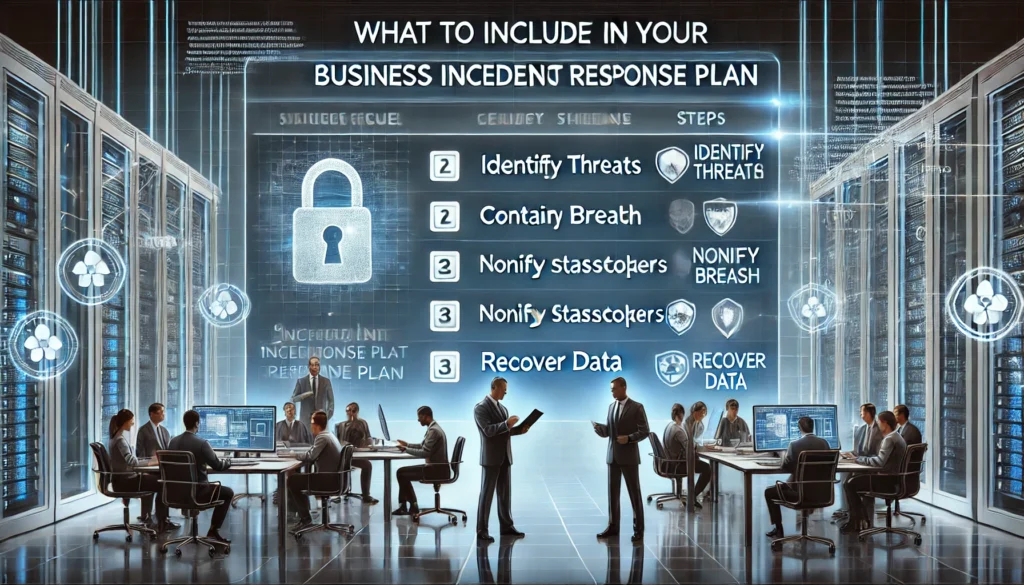
A robust Incident Response Plan (IRP) is crucial for minimizing the damage caused by cyberattacks, ensuring quick recovery, and maintaining business continuity. An effective IRP outlines clear steps to detect, contain, and mitigate threats. This guide details the essential components every business should include in their Incident Response Plan.
1. Clear Incident Response Objectives
Define the primary goals of your incident response process. These objectives should focus on minimizing impact, ensuring quick recovery, and protecting stakeholders.
- Limit Damage: Contain incidents to prevent them from spreading.
- Protect Data: Safeguard sensitive information from theft or exposure.
- Restore Operations: Quickly return systems to normal functioning.
2. Defined Roles and Responsibilities
Identify key personnel involved in the response process and outline their specific responsibilities. This ensures a coordinated and efficient response.
- Incident Response Team (IRT): Assign roles such as team leader, forensic analyst, and communications manager.
- Contact List: Include internal and external stakeholders, such as IT staff, legal advisors, and law enforcement.
3. Incident Detection and Classification
Establish protocols for identifying and classifying incidents. This step helps prioritize responses based on severity and impact.
- Detection Tools: Use firewalls, intrusion detection systems (IDS), and security information and event management (SIEM) tools.
- Classification Levels: Categorize incidents as low, medium, or high severity based on potential impact.
4. Containment Strategies
Containment is crucial to limit the spread of an incident. Your plan should include both short-term and long-term containment measures.
- Short-Term Actions: Isolate affected systems or networks immediately.
- Long-Term Measures: Implement patches or reconfigure systems to prevent reoccurrence.
5. Mitigation and Eradication
Mitigation involves reducing the impact of an incident, while eradication focuses on removing the root cause.
- Mitigation Steps: Secure backups, deactivate compromised accounts, and restrict access.
- Eradication Measures: Identify and eliminate malware or compromised files.
6. Recovery Procedures
Recovery focuses on restoring normal operations while ensuring no lingering vulnerabilities remain.
- System Restoration: Restore affected systems from backups.
- Post-Recovery Testing: Conduct security checks to verify systems are secure.
7. Communication Plan
Effective communication ensures all stakeholders are informed during and after an incident. This includes internal teams, customers, and regulatory bodies.
- Internal Updates: Keep employees informed about the incident’s progress.
- External Notifications: Notify customers and comply with any regulatory disclosure requirements.
8. Post-Incident Analysis
Conducting a post-incident analysis helps identify lessons learned and improves future response efforts.
- Root Cause Analysis: Determine how the incident occurred.
- Plan Updates: Modify the IRP to address gaps identified during the analysis.
Essential Components Checklist
Use this checklist to ensure your IRP includes all essential components:
| Component | Included? |
|---|---|
| Defined Roles and Responsibilities | |
| Incident Detection Protocols | |
| Recovery Procedures |
Final Thoughts
An effective Incident Response Plan can make the difference between a quick recovery and prolonged disruption during a cyberattack. By including these components, your business can respond to incidents efficiently and minimize damage. With SecuEdge solutions, you’ll have the tools and expertise needed to enhance your cybersecurity strategy.
Contact SecuEdge today to learn how we can support your incident response planning and cybersecurity needs.