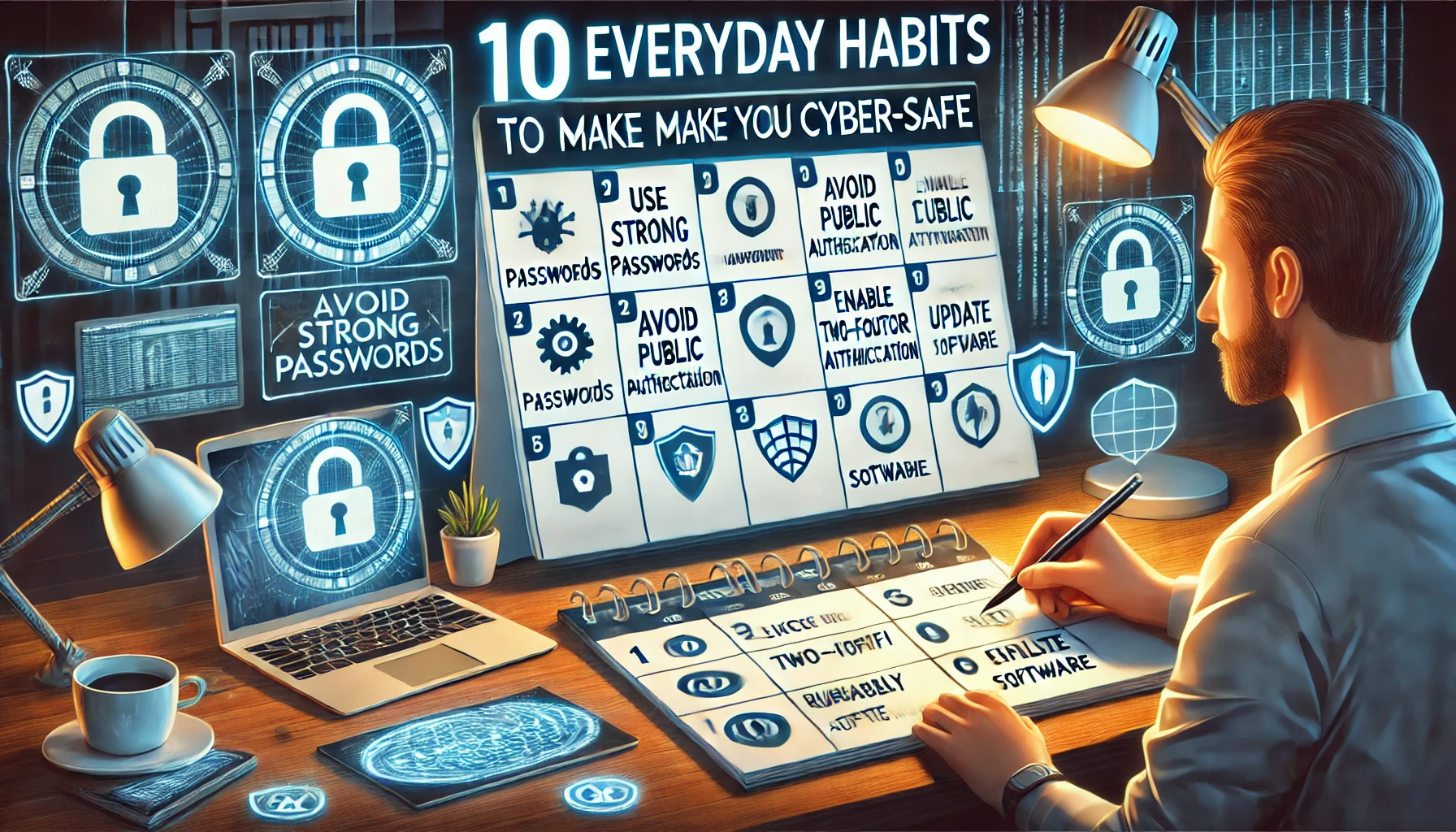
In today’s digital world, cybersecurity isn’t just about complex tools or advanced software—it starts with your daily habits. Simple, consistent practices can go a long way in protecting your personal information from cyber threats. Here are ten everyday habits to help you stay cyber-safe.
1. Use Strong and Unique Passwords
A strong password is your first line of defense against unauthorized access. Make sure every account has a unique password.
- Tip: Use a password manager to generate and store complex passwords.
- Remember: Avoid reusing passwords across multiple accounts.
2. Enable Two-Factor Authentication (2FA)
Two-factor authentication adds an extra layer of security by requiring a second verification step when logging into accounts.
- Examples: A text message code, an authentication app, or a biometric scan.
- Why it matters: Even if someone gets your password, they can’t access your account without the second factor.
3. Be Cautious with Emails
Phishing emails are one of the most common methods hackers use to steal information. Always verify the source before clicking links or downloading attachments.
- Check the sender: Verify email addresses for authenticity.
- Hover over links: Check URLs before clicking to ensure they’re legitimate.
4. Update Your Software Regularly
Keeping your software up to date ensures you’re protected against known vulnerabilities.
- Enable auto-updates: Automate updates for your operating system and apps.
- Don’t delay: Install updates as soon as they’re available.
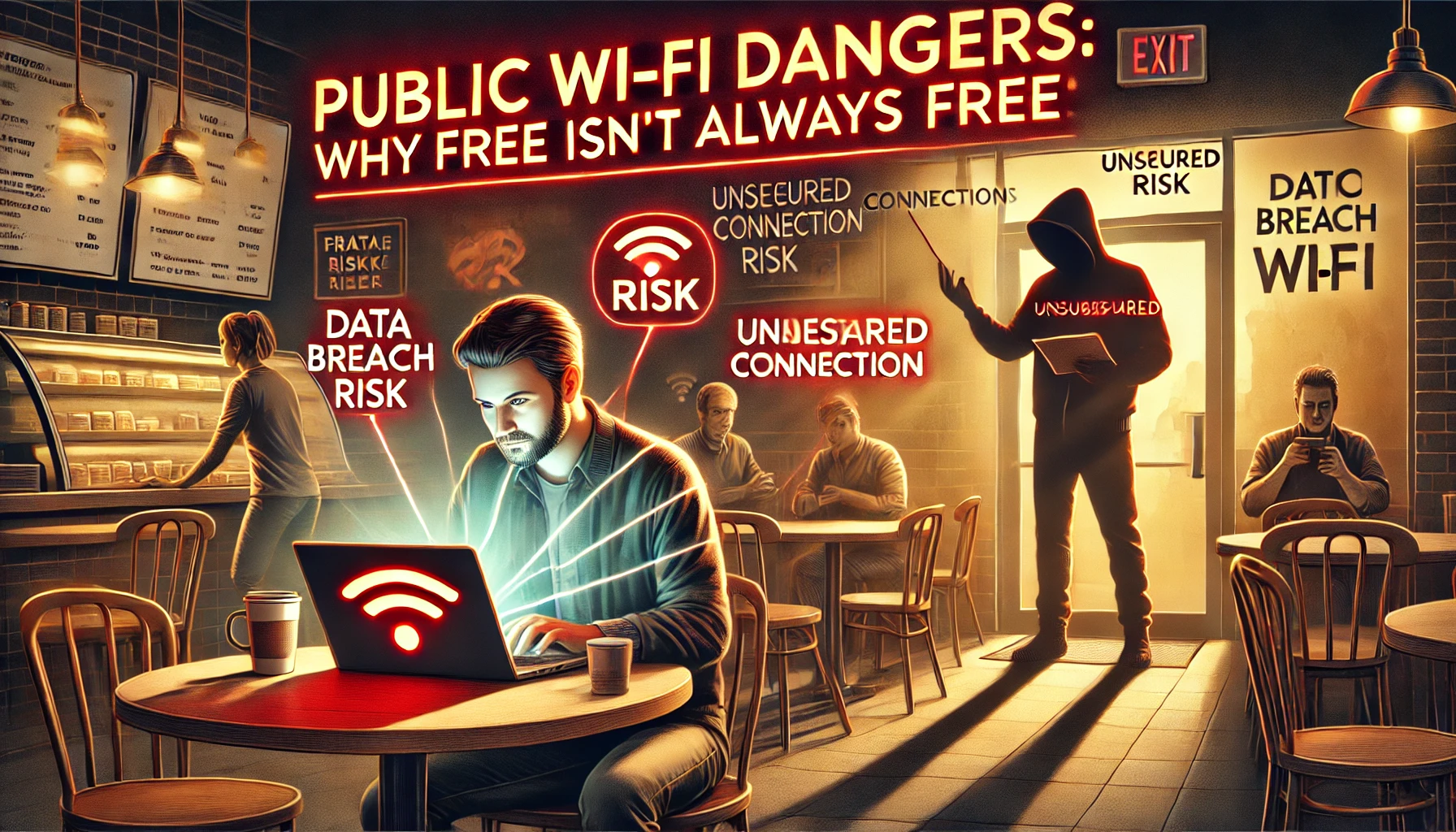
5. Use Secure Wi-Fi Networks
Public Wi-Fi networks are a hacker’s playground. Avoid using them for sensitive activities like online banking.
- Solution: Use a Virtual Private Network (VPN) to encrypt your connection.
- At home: Ensure your router is secured with a strong password.
6. Regularly Back Up Your Data
Backing up your data ensures you can recover important files in case of a ransomware attack or hardware failure.
- Frequency: Schedule weekly backups.
- Storage: Use both cloud and external storage solutions.
7. Protect Your Devices
Your devices are gateways to your personal data. Securing them is essential.
- Encryption: Enable encryption on your devices to protect stored data.
- Antivirus: Install and regularly update antivirus software.
8. Limit Personal Information Online
Be mindful of what you share online, as oversharing can make you a target for cybercriminals.
- Avoid: Sharing sensitive details like your address or birthdate publicly.
- Check settings: Use privacy controls on social media platforms.
9. Monitor Your Accounts
Regularly checking your accounts helps you catch suspicious activity early.
- Bank accounts: Review transactions for unauthorized charges.
- Emails: Watch for login alerts and password reset requests.
10. Educate Yourself
Cyber threats are constantly evolving, and staying informed is one of the best ways to protect yourself.
- Follow experts: Subscribe to cybersecurity news and blogs.
- Attend workshops: Learn from professionals to enhance your knowledge.
Final Thoughts
Good cybersecurity starts with simple, consistent habits. By incorporating these ten practices into your daily routine, you can significantly reduce your vulnerability to cyber threats. Remember, small steps today can lead to big security improvements tomorrow.
Explore SecuEdge solutions to enhance your personal cybersecurity. Contact us today to learn how we can help protect your digital life.